BILATERAL RELATIONS
AZERBAIJAN–JAPAN RELATIONS
General Overview
Diplomatic relations between the Republic of Azerbaijan and Japan were established on 7 September 1992. Japan was among the first countries to recognize Azerbaijan’s independence (28 December 1991). Over the past thirty years, a close political dialogue, economic cooperation, and humanitarian ties based on mutual trust have developed between the two countries.
Political Relations
High-level mutual visits are among the main pillars of bilateral relations. During the visit of National Leader Heydar Aliyev to Japan in February 1998, eight important documents were signed and the key areas of cooperation were identified. In 2006, President Ilham Aliyev paid an official visit to Japan, further expanding bilateral relations.
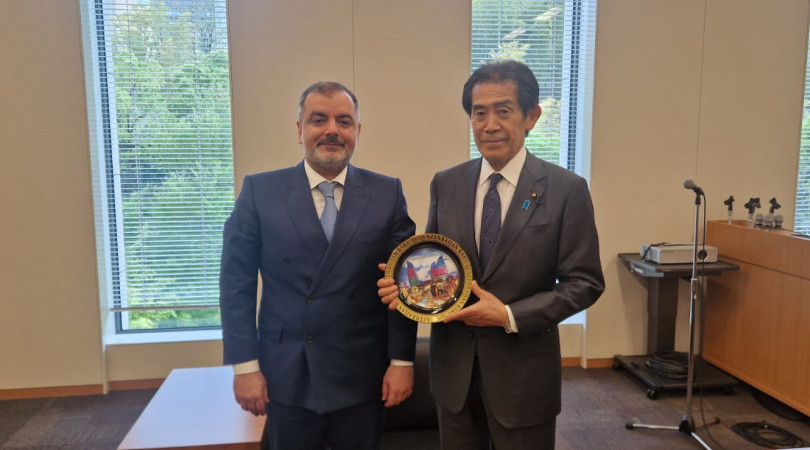
The Friendship Group with Azerbaijan operating in the Japanese Parliament and the working group established in the Milli Majlis of Azerbaijan ensure the inter-parliamentary dimension of relations. Currently, the Azerbaijan–Japan Inter-Parliamentary Working Group is chaired by MP Amina Agazade, while the Japan–Azerbaijan Friendship Group is headed by Kazunori Tanaka.
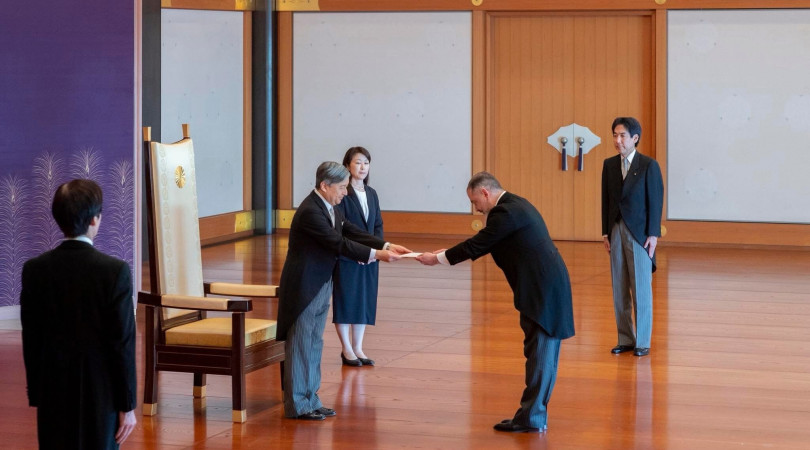
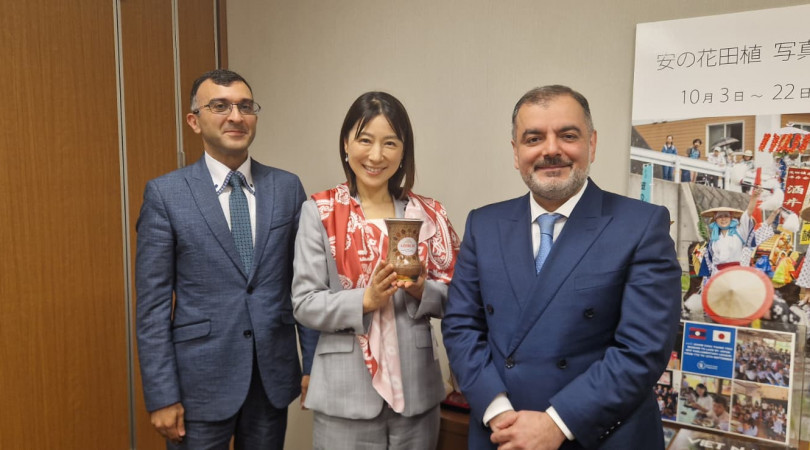
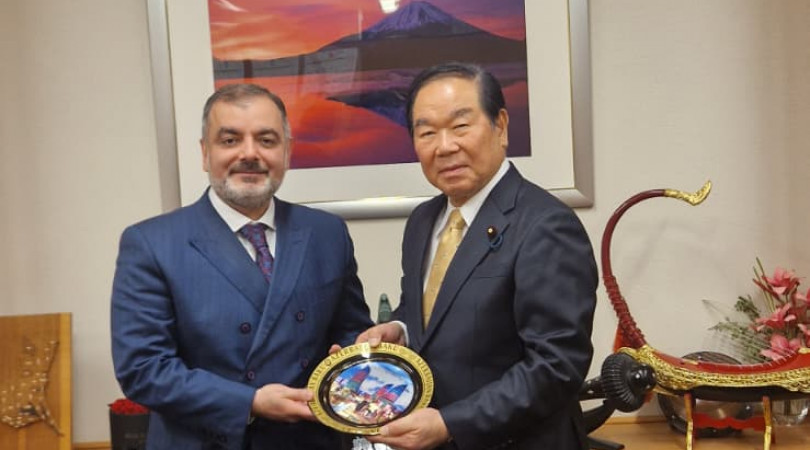
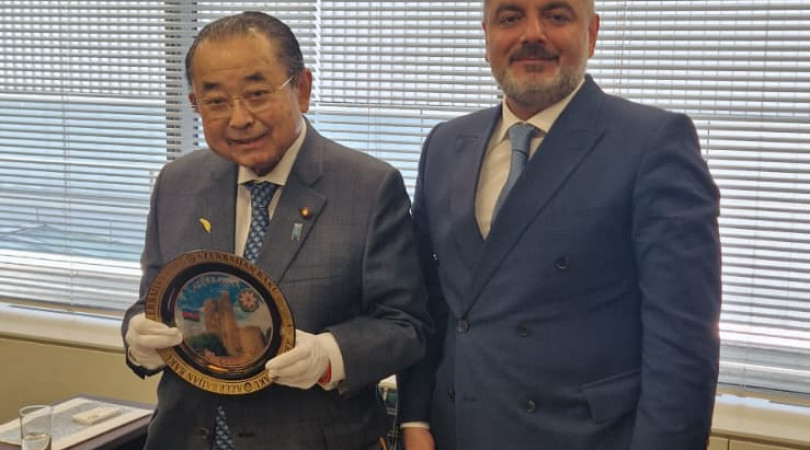
Japan’s Ambassador Extraordinary and Plenipotentiary to Azerbaijan, Katsuya Watanabe, has been serving since 7 January 2024. Farid Yunis oglu Talibov was appointed Ambassador of the Republic of Azerbaijan to Japan on 27 October 2025.
Regular political consultations are held between the Ministries of Foreign Affairs of Azerbaijan and Japan. The most recent round took place in Baku on 2 October 2025. Alongside bilateral cooperation, the discussions covered regional security, the peace process, reconstruction efforts in Karabakh and Eastern Zangezur, climate initiatives, and cooperation within international organizations.
Economic Cooperation
Energy, transport, investment, and trade play leading roles in bilateral economic relations. Japan is one of Azerbaijan’s key partners in technology and industry. The Intergovernmental Economic Commission, operating since 1999, has played an important role in the development of these ties.
On 26 September 2025, the 12th meeting of the Commission was held in Tokyo. The meeting was co-chaired by SOCAR President Rovshan Najaf and ITOCHU representative Tetsuya Yamada, addressing investment opportunities in the liberated territories, cooperation in transport, “green” energy, and industry. Several cooperation memoranda were signed during the visit.
In 2024, bilateral trade turnover amounted to 428 million USD, while in the first four months of 2025, the figure reached 131 million USD. Azerbaijan’s exports mainly include aluminum, grape wines, and processed agricultural products. Imports from Japan consist primarily of automobiles and industrial goods.
Cooperation in the Energy Sector
Japanese companies have participated in major energy projects such as Azeri–Chirag–Guneshli, Shah Deniz, and the Baku–Tbilisi–Ceyhan pipeline. Japan has also played a significant role in financing the “Shimal-1” and “Shimal-2” power plants.
In 2021, a concept for establishing a “green energy zone” in the liberated territories was agreed upon with TEPSCO, and in 2024, an arrangement was reached on implementing a monitoring mechanism. Japan’s participation in the COP29 Summit reflected its support for Azerbaijan’s climate initiatives.
Humanitarian and Cultural Cooperation
Baku will host the World Sumo Championship in 2026. Azerbaijan will participate in the Green Expo to be held in Yokohama in 2027. In the cultural sphere, priorities include cooperation on UNESCO World Heritage nominations, bilateral exhibitions, book projects, and partnerships among filmmakers.
Cooperation in Karabakh and Eastern Zangezur
The Government of Japan is interested in participating in reconstruction and development efforts in the Karabakh and Eastern Zangezur economic regions. The companies “Shinyei Kaisha” and “Tokyo Engineering Consultants” have proposed infrastructure projects in these territories. Japan’s technical assistance to ANAMA in mine clearance operations also continues.
Cooperation within International Organizations
Azerbaijan and Japan provide mutual support in the UN, UNESCO, and other international organizations. Japan supported the UN Security Council resolutions on Azerbaijan in 1993 and joined climate initiatives within the framework of COP29 in 2024.
Interregional Relations
The Ismayilli–Ito and Khatai–Shika sister-city partnerships are among the key examples of cooperation in this area. Additionally, initiatives exist to develop cooperation between Agdam–Hiroshima and Shusha–Okayama. Several Azerbaijani cities have also joined Japan’s “Mayors for Peace” initiative.